


Jade Similar to Jadeite and How to Distinguish Them
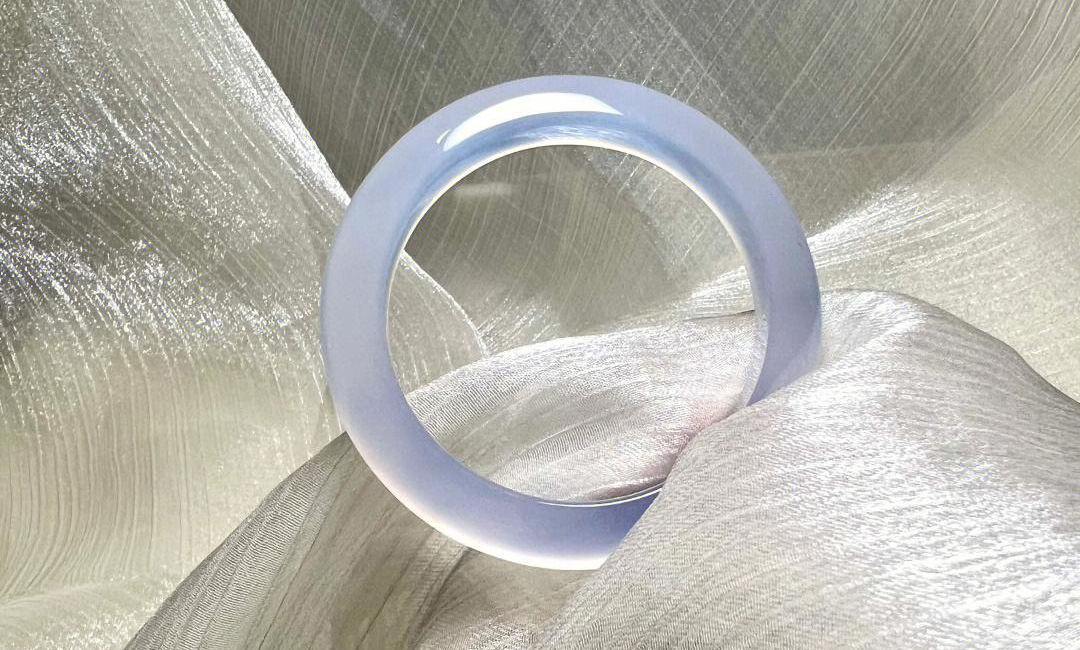
I. Why Are We Discussing This Topic?
Jadeite has become all the rage, and stones that look like jadeite have benefited from its popularity.There are many types of jade on the market that, at first glance, look almost identical to jadeite, yet their prices differ by tens or even hundreds of times. Some merchants pass off these “imposter” stones as the real thing to profit from the price difference.
This article will cover several common types of jade that mimic jadeite—what they\'re called, what they look like, and how to distinguish them from genuine jadeite. By the time you finish reading, you\'ll be able to avoid at least 70–80% of the pitfalls.
II. First, the most important point
Remember this core principle: Jadeite has its own unique “identifying features”—a fibrous interwoven structure, jadeite texture (commonly known as “fly wings”), color roots, and high hardness. No matter how similar a fake may seem, there will always be a telltale flaw.
Below, we\'ll go through them one by one based on how closely they resemble the real thing.
III. Shuimozi—The “Rich and Beautiful” Imitation That Looks Most Like Jade
What is it?
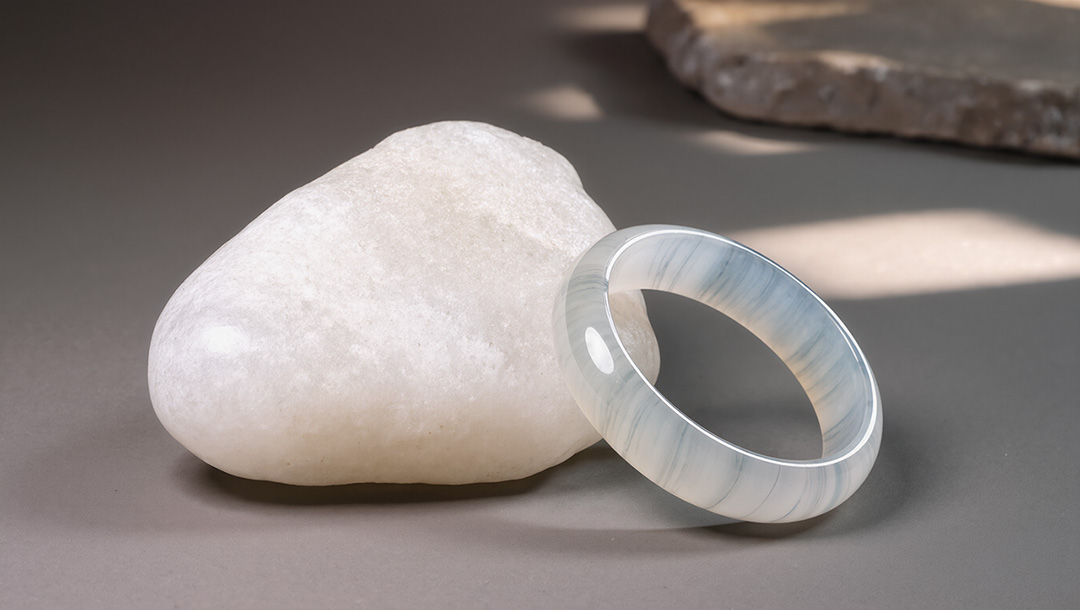
Shuimozi\'s scientific name is sodium feldspar jade. It is found right next to the jadeite mining areas in Myanmar, making it a neighbor of jadeite. Because it often features white or light green, fluffy spots that resemble foam stirred up by flowing water, it is called Shuimozi.
How similar does it look?
Translucent to semi-translucent, with an “ice-like” or “glass-like” appearance and a clean interior, it often looks even more beautiful than many genuine jadeites. When crafted into bracelets or pendants, the average person can hardly tell the difference.
How to Tell the Difference (Key Distinctions)
-
Examine the “jadeite luster”: This is the most important distinction. When light is shone obliquely on the surface of genuine jadeite, you can see shimmering, flaky reflections resembling the wings of a fly; this is called the jadeite luster (scientifically known as “reflection on cleavage planes”). Shuimozi lacks this characteristic entirely; its surface is uniform and non-shimmering.
-
Weigh it: The density of water-foam jade (which can be understood as how “compact” it is) is around 2.6, while jadeite is 3.33.For bracelets of the same size, shui mo zi feels light and flimsy in the hand, like plastic; jadeite feels heavy and substantial, with a “heavy-in-the-hand” sensation. Simply put: for the same volume, jadeite is much heavier.
-
Examine internal “clouds”: The internal inclusions commonly found in shuimo resemble white “cotton” or “snowflakes” and are distributed relatively evenly. The “clouds” in jadeite are irregular and clump-like, lacking such uniformity.
-
Examine the luster: Jadeite has a vitreous luster that is bright and sharp. Water-speckled jade has a waxy or weak vitreous luster that appears somewhat dull.
-
Sound when tapped: A jadeite bracelet produces a clear, resonant “ding—” when tapped; shuimozi produces a short, muffled “tap, tap.”
In a nutshell: If it\'s light, lacks luster, and doesn\'t ring when tapped, it\'s most likely shui mo zi.
IV. Dushan Jade — The “Colorful Imitator” from Henan
What is it?
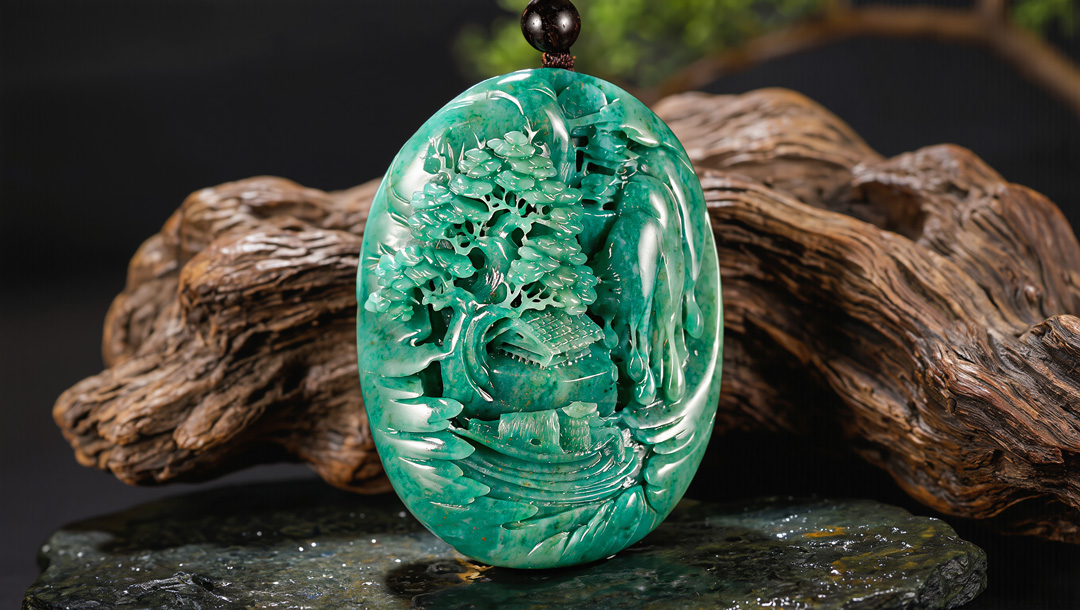
Dushan Jade is produced in Dushan, Nanyang, Henan, and is one of China\'s four famous jades. It comes in a particularly rich variety of colors—white, green, purple, yellow, and black—with the green variety bearing a strong resemblance to jadeite.
How to Identify It
-
Examine the structure: This is the most reliable way to tell them apart. Jadeite has an interwoven fibrous structure, resembling countless fine fibers intertwined; under strong light, it gives the impression of “loofah pulp.” Dushan Jade has a granular structure, resembling sugar granules pressed together, with a distinct granular texture.
Tip: Shine a strong flashlight from the side and rotate the object to view it from different angles. Jadeite\'s structure appears “disordered and fibrous,” while Dushan Jade\'s is “fine-grained.”
-
Examine the green coloration: The green in Doushan jade is often distributed in spots or clumps, with the surrounding areas typically white or grayish-white, creating a stark contrast. The green in jadeite appears more natural, with distinct color roots and a smooth transition into the background color.
-
Examine transparency: Most Dushan jade is opaque to translucent, rarely achieving the “crystal-clear” transparency of jadeite. Dushan jade with a visibly translucent green is very rare.
-
Weigh it: Dushan jade has a density of 2.7–3.0, making it slightly lighter than jadeite, though the difference is not as pronounced as with “water foam” jade. It requires some experience to distinguish by feel.
5. Xiuyu — The Soft and Plump “Green Fat Boy”
What is it?
Xiuyu (scientific name: serpentine jade) is primarily produced in Xiuyan, Liaoning, and is one of China\'s oldest types of jade. Common colors include yellowish-green and pale green, ranging from translucent to opaque.
How to Identify It
-
Compare hardness: This is the quickest method. Jadeite has a Mohs hardness (a standard for mineral hardness, where 1 is softest and 10 is hardest) of 6.5–7. Xiuyu ranges from 2.5 to 6 (mostly around 4–5).Scratch it with a steel knife (hardness approx. 5.5)—Xiuyan jade will show scratches, while jadeite will not.
Note: When testing, choose an inconspicuous back side or corner; do not scratch the front. Alternatively, gently test with the tip of a key; if it leaves a mark, it is not jadeite.
-
Examine the luster: Jadeite has a vitreous luster, while Xiuyu has an oily or waxy luster, appearing “oily and soft,” lacking sharpness.
-
Examine the interior: Xiuyu commonly contains black magnetite inclusions (small black specks) or white, fluffy-looking inclusions. Jadeite also has black spots, but their appearance differs.
-
Feel the texture: Xiuyu feels “slimy” to the touch, like soap. Jadeite feels “cool and smooth.”
6. Grape Stone — The “Vividly Green” Transparent Gem
What is it?
Grape stone is an aggregate of single-crystal minerals, often yellow-green or apple-green in color, with high transparency—crystal-clear and watery—and is frequently used by merchants to pass off as ice-type jadeite.
How to Identify It
-
Check for “Fluorescence”: This is the most distinctive feature of grape stone.When you rotate grape stone under a light source, a white or pale blue halo appears inside, resembling a thin layer of light floating on the surface. Jadeite does not exhibit this halo; the “fluorescence” in jadeite refers to bright lines formed by light refraction, which is different from this.
-
Examine the internal fibers: Grape jade commonly features a radiating fiber structure, resembling bursting fireworks or broom bristles. Jadeite, on the other hand, has a chaotic, interwoven fiber structure and lacks this “radiating” pattern.
-
Examine the color: Grape stone has a uniform, fresh, and vibrant color, resembling freshly squeezed grape juice. The green in jadeite often varies in intensity; it is impossible for the entire piece to be exactly the same.
-
Weigh it: Grape stone has a density of 2.8–2.9, making it slightly lighter than jadeite. For the same size, grape stone feels “a bit lighter” in the hand.
VII. Green Agate / Chalcedony — An overly uniform “plastic-like” appearance
What is it?
Both agate and chalcedony are composed of silica (the same as sand). They range from transparent to translucent and can be dyed various shades of green. Many inexpensive green bracelets and pendants are made from this material.
How to Identify
-
Examine color uniformity: Green agate has an overly uniform color—the entire piece is a single shade with no color roots or variations in intensity, resembling a painted surface. Even the most uniform jadeite green will exhibit subtle variations in depth.
-
Examine the internal structure: Agate commonly features banded structures (resembling the patterns in Skittles), and when held up to the light, you can see layered, curved patterns. Jadeite does not have these bands.
-
Examine the luster: Agate has a vitreous to sub-vitreous luster, but its surface feels “lifeless,” lacking the “vibrant” quality of jadeite.
-
Examine the “jade-like” texture: Agate completely lacks this “jade-like” texture (fly wing effect).
8. Australian Jade (Green Chalcedony)—The "Milky Green" Imposter
What is it?
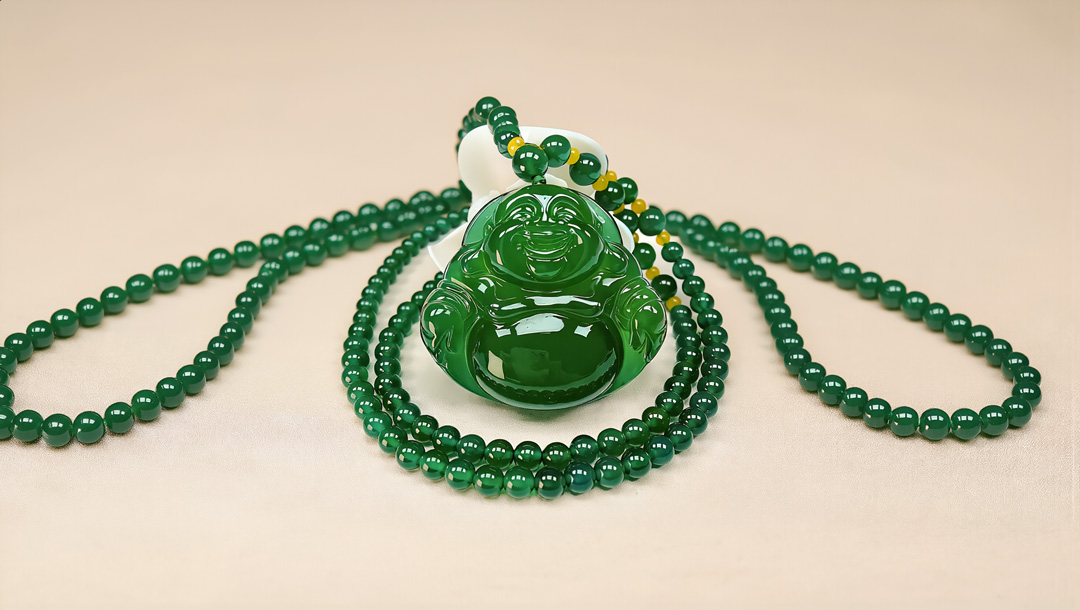
Australian Jade is green chalcedony sourced from Australia. It features uniform apple green or milky green hues, is translucent, and has a fine, smooth texture.
How to Identify It
-
Color: Australian Jade has a “milky” green color, resembling milk with a touch of green pigment—neither vivid nor intense, with a slightly whitish hue. Even when light, jadeite\'s green possesses “translucency” and “vigor,” without a milky quality.
-
Examine the structure: Under a magnifying glass, Australian Jade shows almost no granular structure; it is extremely fine and uniform. Jadeite reveals a distinct interwoven fibrous structure.
-
Examine the jade-like luster: None. Absolutely none.
-
Check the weight: Australian jade has a density of around 2.6, making it noticeably lighter than jadeite.
9. Glass — The Cheapest “Imitation Jadeite”
What is it?
It is ordinary glass (silicon dioxide mixed with pigments), melted and cast into various shapes, then polished. The resulting “jadeite” is completely translucent with vivid colors and is commonly known as “glassware.”
How to identify
-
Look for bubbles: Under a 10x magnifying glass, you\'ll often see round or oval bubbles inside the glass. Natural jadeite is absolutely bubble-free.
-
Check for swirl patterns: When glass is cast, it leaves behind swirling patterns resembling the flow of molten material (like the traces left when stirring syrup); jadeite does not have these.
-
Check the temperature: Glass conducts heat slowly, so it feels slightly warm to the touch at first; jadeite conducts heat quickly and feels ice-cold to the touch. This difference is more noticeable in winter.
-
Weigh it: Glass is noticeably lighter than jadeite.
-
Examine the fracture: If accidentally broken, glass has a conchoidal fracture (like a shattered beer bottle), while jade has a jagged, uneven fracture.
10. A chart to understand their main differences
| Type | Density (Feel) | Hardness | Examine Structure Under Magnification | Jade-like Characteristics | Common Flaw |
|---|---|---|---|---|---|
| Jadeite | Heavy, substantial | 6.5–7 | Interlaced fibers | Present | — |
| Watery | Light and airy | Around 6 | Grainy | None | Lightweight, non-sparkling |
| Dushan Jade | Medium | 6–6.5 | Grainy | None | Green, clumpy, granular texture |
| Xiuyou | Medium | 2.5–5 | Leaf-like | None | Can be carved with a knife |
| Grape stone | Relatively light | 6–6.5 | Radial | None | Internal "halo" |
| Green agate | Slightly light | 6.5–7 | Banded | None | Color is too uniform |
| Australian jade | Slightly light | 6.5–7 | No grainy texture | None | Milky green, no structure |
| Glass | Light | 5–6 | Bubbles | None | Bubbles, swirl patterns |
XI. A Practical “Three-Step Method” for Everyone
If you can\'t remember all of the above, just remember these three steps:
Step 1: Check the weight. If it feels light and insubstantial in your hand, be skeptical.
Step 2: Check for shimmer. Shine a light at an angle across the surface to see if there are any iridescent reflections resembling fly wings (the “jadeite luster”). If not, it\'s not jadeite.
Step 3: Check the certificate. For anything that looks like jadeite but you\'re unsure about, check the certificate. Whether it\'s labeled “jadeite” or “sodium feldspar jade,” “serpentine jade,” etc., it will be clear at a glance.
XII. A Final Word
These imitation jades aren\'t trash in themselves—Shuimo jade is crisp and refreshing, Dushan jade is colorful, and Xiuyang jade is warm and lustrous; each has its own beauty. The problem is, you shouldn\'t pay jadeite prices for a piece of Shuimo jade.
So remember: Don\'t believe in “bargains”; trust certificates and common sense. If an ice-type jadeite bracelet with floral patterns is selling for only 1,000 yuan, don\'t even look at it—it\'s either water jade or glass.
Additionally, if you\'re a beginner, I recommend visiting reputable department stores or jewelry exhibitions to study genuine jadeite. Once you\'ve seen enough, you\'ll instinctively sense that something is “off” about a fake. This intuition is more reliable than any identification technique.
Note: The methods described in this article can serve as a reference for everyday identification, but for high-value jadeite, we strongly recommend having it certified by an authoritative institution such as the NGTC (National Gemstone and Jade Quality Supervision and Inspection Center).