


Folklore and Origins of the Three-Legged Golden Toad
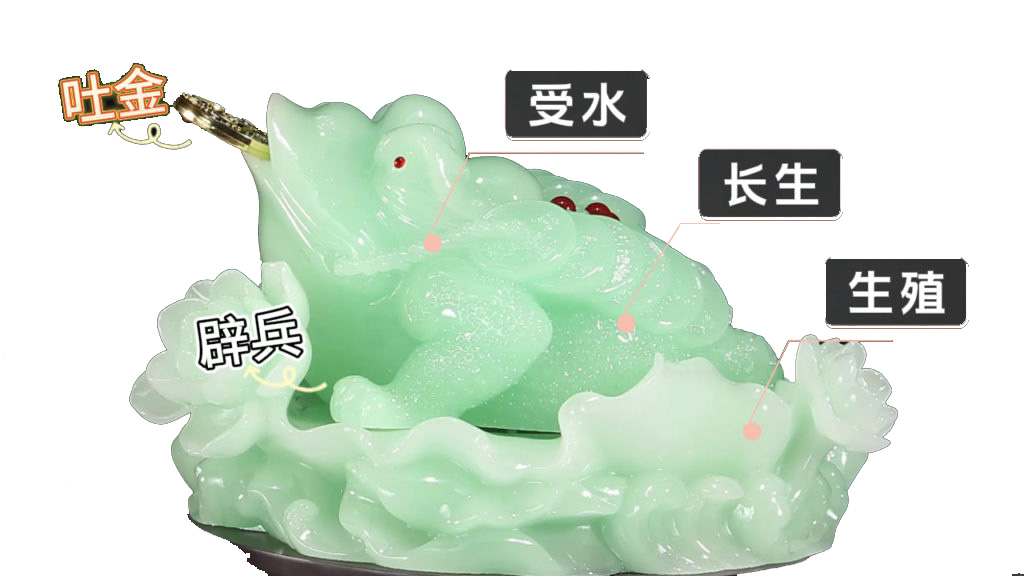
The Golden Toad is, in essence, a toad, and it is regarded as a mystical creature in Chinese folklore and traditional culture.
Since ancient times, the toad has embodied the boundless and vivid imagination of our ancestors: from primitive fertility cults to beliefs in immortality, to its integration into mythology as a symbol of the moon, and subsequently its incorporation into the Daoist pantheon, as well as the concepts of the Five Elements and Yin-Yang.As a result, the toad embodies a multitude of fantastical abilities, including fertility, immortality, the power to absorb water, protection against warfare, and the ability to spit out gold. To this day, many allusions and customs related to the toad remain an active part of our lives.
A Totem of Fertility Worship
Nüwa is the goddess of creation in ancient Chinese mythology. Whether in name or form, Nüwa is closely associated with the frog.Contemporary scholar Yi Zhongtian, in his book *Yi Zhongtian\'s History of China: Ancestors*, proposes that “Nüwa is ‘Nüwa\' (女蛙), the frog goddess who presides over childbirth, and also the goddess of victory who leads us in the battle against death.“She is the frog; our children are the ‘wa\' (meaning ‘frog\' in Chinese).” Thus, the frog or toad has long been one of the earliest totems worshipped by our ancestors.
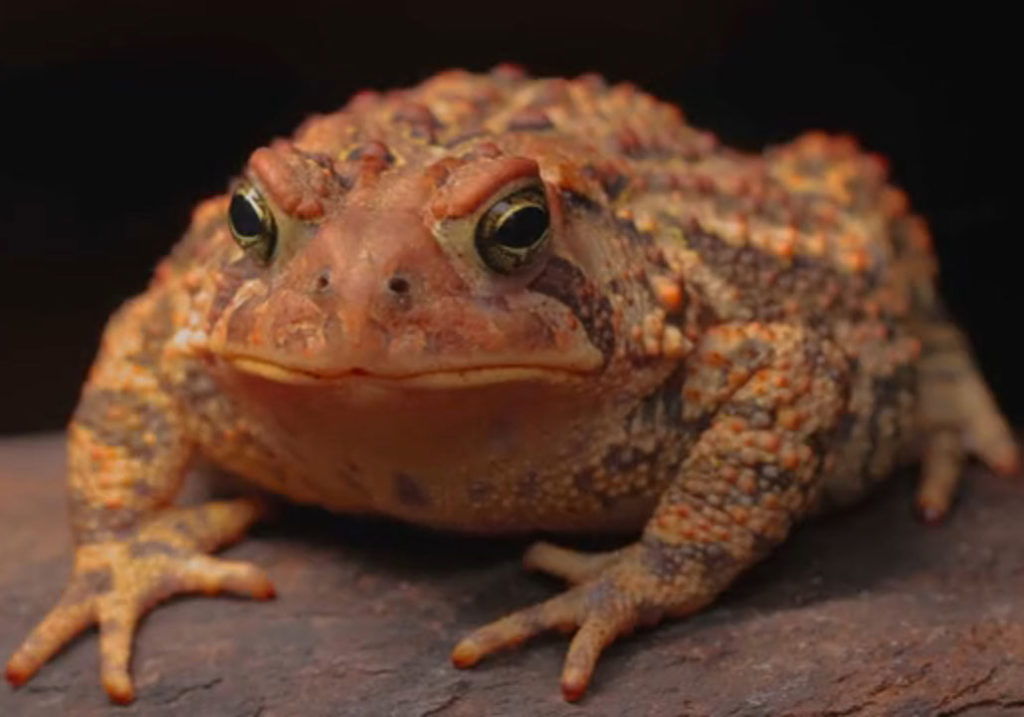
As early as the Neolithic period, when human survival capabilities were very limited, diseases, natural disasters, and tribal conflicts posed serious threats to the survival of entire communities. Consequently, primitive tribes had no choice but to rely on high fertility rates to ensure the continuity of their groups.In the eyes of our ancestors, fertility was a sacred power bestowed by the heavens; thus, the toad—capable of laying large numbers of eggs—became a totem of fertility worship.
A Symbol of Immortality
With the development of agricultural civilization, people\'s focus gradually shifted from the survival of the group to the immortality of the individual. The toad\'s habit of hibernation was viewed by the ancients as a symbol of “dying and being reborn.” Thus, the ancients also placed their faith in immortality upon the toad.
Zhang Heng of the Eastern Han Dynasty recorded the story of “Chang\'e Transforming into a Toad” in his work *Ling Xian*: Yi sought the elixir of immortality from the Queen Mother of the West, but Chang\'e stole it and fled to the moon. Before her departure, Mei divined her fate at Youhuang.The divination at Youhuang declared: “Auspicious. The graceful maiden returns, setting out alone toward the west. Though she encounters a dim sky, let her neither fear nor be alarmed; great prosperity shall follow.”” Chang\'e thus took up residence on the moon, becoming the toad. This means that Chang\'e, Yi\'s wife, stole and consumed the elixir of immortality that the Queen Mother of the West had bestowed upon Yi, and then flew to the moon.Just as she was about to set off, she sought out You Huang for a divination. You Huang cast a hexagram for her and said, “It is auspicious. Fly gracefully, journeying alone toward the west. If you encounter darkness in the heavens, do not panic or be afraid; all will be well in the end.”
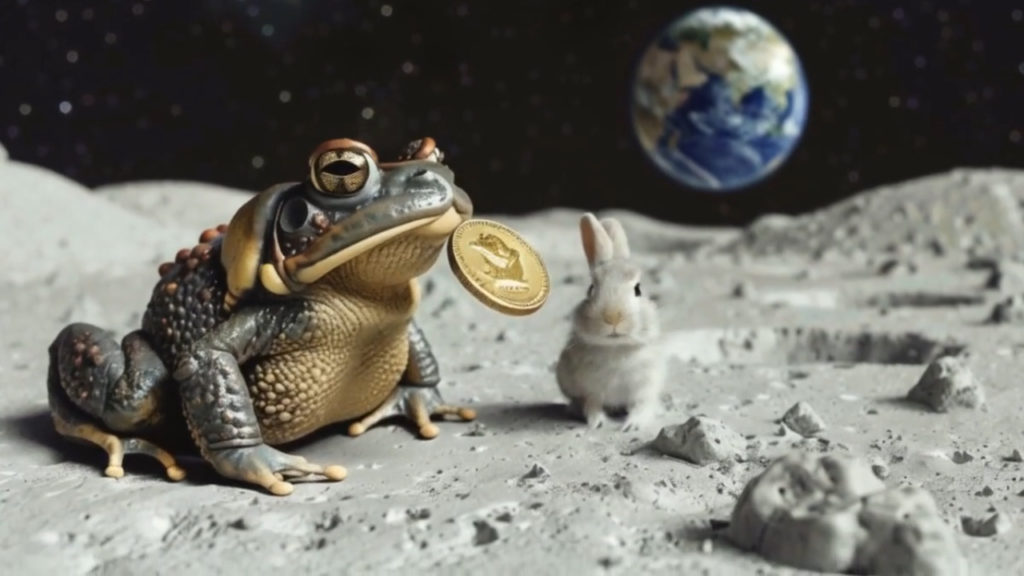
Chang\'e then settled on the moon and was transformed into a toad from that day forward. The Han Dynasty text *Shi Tui Zai Du* records: “The moon—on the third day, the crescent is formed; on the eighth day, its light is full; the toad\'s form is complete, and its nostrils begin to emerge.”This means that after three days, the moon\'s spirit and form are established; after eight days, it shines brightly; the toad is fully formed; and the rabbit begins to take shape.From then on, the moon has also been known as the “Toad Palace.” Thus, people believe that Chang\'e, having consumed the elixir of immortality, transformed into a toad; the toad, in turn, gained immortality. It represents the moon and symbolizes eternal life.
The Toad\'s Ability to Control Water
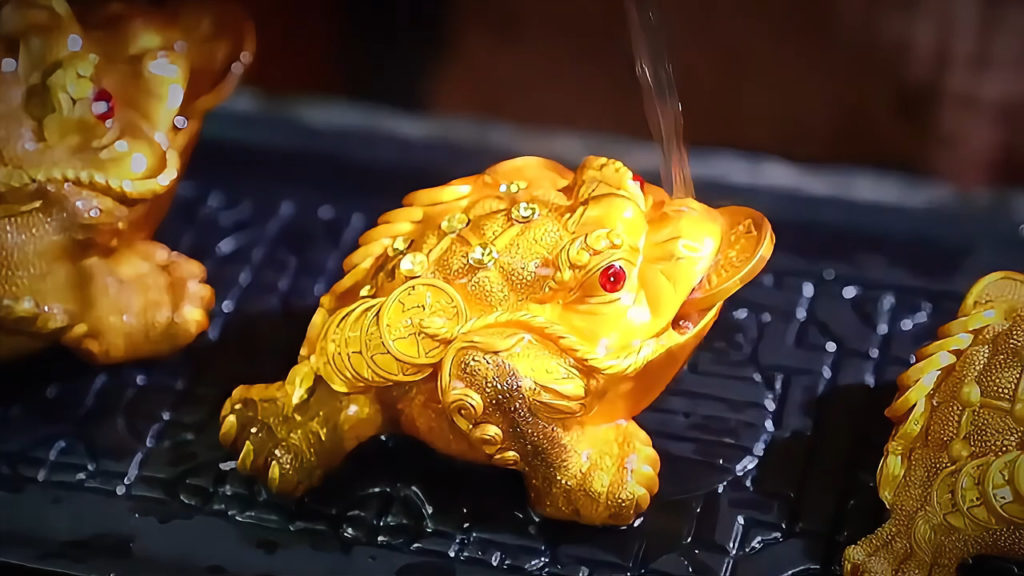
In an agricultural society, rainfall largely determined the grain harvest, so the toad took on the mission of praying for rain. Jiao Yanshou\'s *Jiao\'s Yi Lin: Daguo: Sheng* from the Western Han Dynasty records: “Toads gather in groups to ask the heavens for rain.Clouds and thunder gather, and rain is granted in due season. Their wishes are fulfilled.”To this day, Zhuang villages along the Red River hold annual rituals to worship “Ma Gui” (the frog deity) to pray for favorable weather and bountiful harvests. The toad\'s ability to “receive water” has also inspired its design as an inkstone drip tray in scholars\' study and as a drainage component in architecture.
“Warding Off War” to Protect Homes and Repel Evil Spirits
Eastern Han Dynasty murals and stone reliefs also depict toads dancing or holding swords and shields in their forelimbs. In Daoist mythology, the toad serves as an attendant to the Queen Mother of the West; in addition to its primary duty of pounding medicinal herbs, it also appears as a dancer and a guard.The *Wenzi: Shangde* from the Spring and Autumn Period records: “The toad wards off weapons; its lifespan lasts until the full moon of the fifth month.” In Wu Daozi\'s Tang Dynasty painting *Sending Off the Heavenly King*, the shields of the martial generals guarding the celestial deity are also adorned with images of toads.The toad\'s immortal nature and role as a guardian symbolize its ability to “ward off weapons” (that is, to evade harm from weapons). Therefore, the toad is also believed to have the power to protect homes and ward off evil spirits.
Liu Haichan and the Golden Toad
By the Tang Dynasty, the toad in Daoism had become a divine beast that guided mortals on their path to immortality.According to *Effective Methods for Immortals to Save the World: Volume II*, Liu Haichan—one of the Five Northern Patriarchs of the Quanzhen School—“served as chancellor under the Liao Dynasty. Upon encountering Great Immortal Lü (i.e., Lü Dongbin), he resigned his post, feigned madness, and took refuge in Qinchuan…The Great Immortal Lü imparted the teachings of alchemy to him… Upon attaining enlightenment, he withdrew to Mount Zhongnan and Mount Taihua, and ascended to the Daoist altar.” The most crucial step in this process was “accidentally playing with a golden toad, thereby attaining enlightenment.”
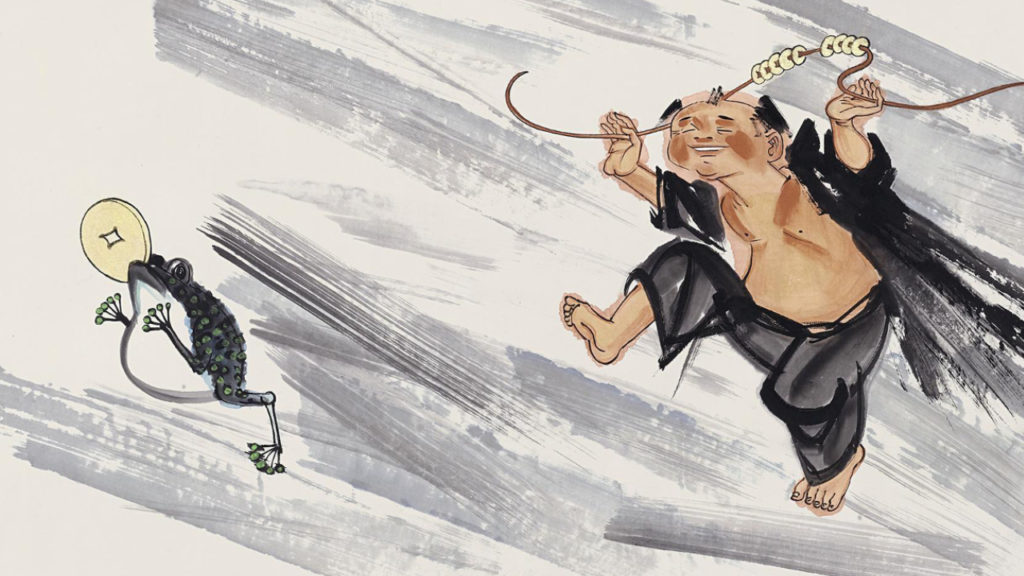
The notion that the golden toad is a three-legged toad has a long history. In Volume 1 of *The Five Collections of Jianhu* by Chu Renhuo of the Qing dynasty, under the entry “Song of Liu Haichan,” it reads:“Today, paintings depict a disheveled, barefoot figure laughing and playing, holding a three-legged toad and fiddling with it; this is called the ‘Liu Hai Playing with the Toad\' painting.”” In the Qing dynasty, the Master of Dongxuan\'s *Records of the Strange* (Volume 1) states: “In ancient times, it was said that the toad had three legs, dwelt in a cave beneath the moon, and was an immortal creature.” Thus, not only is there a “three-legged crow in the sun” (*Lun Heng: On the Sun*), but there is also a three-legged toad in the moon.
Earth gives rise to metal; thus, the golden toad spits out gold
Based on the folk tale of Liu Hai playing with the golden toad, the people conceived the legend: “Liu Hai plays with the golden toad; with every step, he reaps gold coins”:Liu Hai, a disciple of Lü Dongbin, captured a three-legged golden toad. Liu Hai commanded it to spit out gold coins to aid the common people far and wide; thus, households everywhere began to venerate this three-legged golden toad as a bringer of wealth.
The concept of the golden toad spewing gold is not entirely a figment of the imagination; rather, it embodies the principles of the Five Elements and the Eight Trigrams. According to the Qing Dynasty Taoist priest Liu Yiming\'s *Detailed Annotations to the 100 Chapters of Journey to the West* (Chapter 95), “The toad is a golden toad… Earth gives rise to Metal…The Palace of Broad Cold is a realm of pure yin, representing the ‘Kun\' trigram;and when Earth resides in the ‘Kun\' hexagram, it is authentic and capable of giving birth to all things.” In other words, according to the Five Elements theory, Earth can only generate Metal when it is within the Kun hexagram; since the moon—represented by the toad—is a realm of pure Yin and corresponds precisely to the Kun hexagram in the Eight Trigrams, the golden toad is thus able to spit out gold.
A Mythical Beast That Attracts Wealth and Blessings
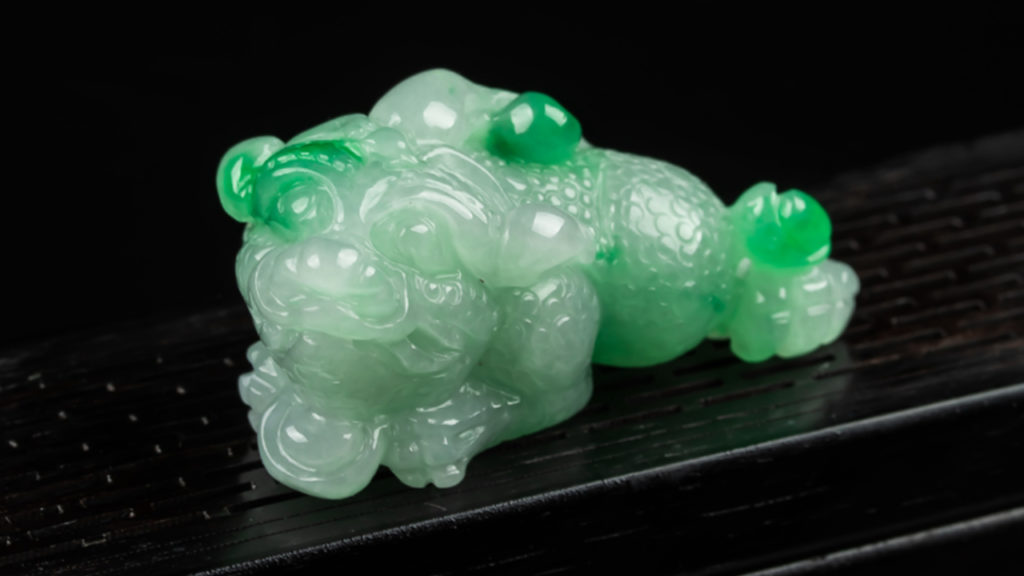
Today, when people speak of the Golden Toad, they are generally referring to the three-legged Golden Toad, which is distinct from the four-legged toad. The three-legged Golden Toad is the divine beast that ascends to immortality. Its image and symbolism are woven from a tapestry of cultural elements and folk legends throughout history.People regard it as an auspicious creature that attracts wealth and brings good fortune; it symbolizes wealth, health, and longevity, wards off evil spirits, and protects the home, embodying people\'s aspirations for a better life and their reverence for the divine.
Whether in jade carving or other forms of cultural and artistic expression, the three-legged golden toad is a highly popular motif.