


The Haze in Raw Jadeite: A Detailed Explanation of Its Causes, Colors, and Types
I. What Is the “Haze” in Jadeite?
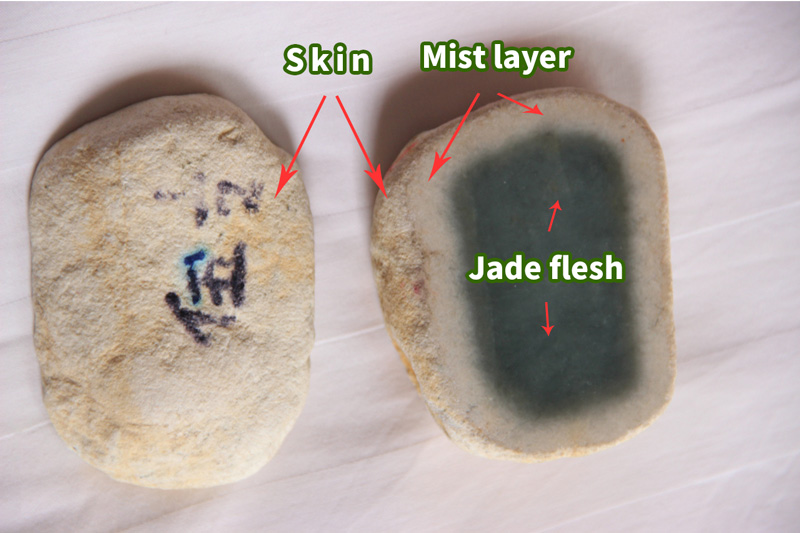
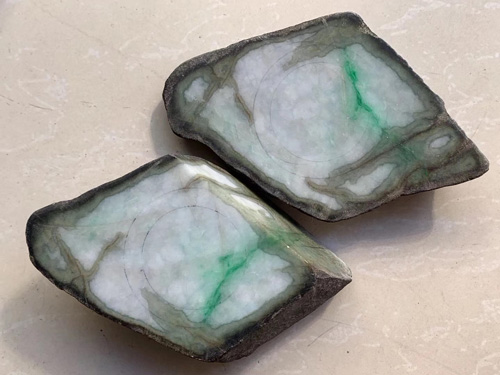
If you've ever seen a jadeite rough stone, you'll notice that most of them are covered with a rough outer layer, much like a potato covered in dirt.When cut open, there is often a hazy, mist-like layer sandwiched between the outer skin and the crystal-clear jade flesh inside—this is what experts refer to as “mist.”
Simply put, “mist” is a transitional layer between the “skin” and the “flesh” of jadeite. It is neither the outermost weathered skin nor the pure jadeite inside (known in the trade as “flesh”), but rather a layer of jadeite that is halfway between the two—partially oxidized and partially weathered.You can think of it as a “gradient zone” within a piece of jadeite, extending from the outside in—the outermost layer is the rough skin, the innermost is the jade flesh, and the faintly visible layer in between is the “fog.”
It's important to note that “fog” is not present in every piece of jadeite rough. Only jadeite from secondary deposits—which has undergone prolonged weathering, transportation, and burial—forms a distinct “fog” layer; jadeite from primary deposits, on the other hand, typically lacks this feature.
II. How Is “Mist” Formed?
To understand the origin of the “mist,” one must first understand the “past and present” of jadeite.
Jadeite originally formed deep within the Earth\'s crust under high-pressure, low-temperature conditions as a rock composed primarily of jadeite. Later, as a result of tectonic movements, some jadeite was uplifted to the Earth's surface, where it was transported by rivers, deposited, buried, and subjected to a long process of weathering. It is precisely during this process that the “mist” formed.
There are currently two mainstream explanations for the formation of this “fog”:
Explanation 1: Retro-metamorphism. When jadeite is buried to a certain depth, the temperature drops and pressure increases, causing the jadeite minerals on its surface to undergo “retro-metamorphism,” forming new secondary minerals (primarily sodium feldspar and nepheline) that envelop the jadeite rock.These layers of secondary minerals are the precursors to the “fog” pattern.
Explanation 2: Surface geological processes. When jadeite is exposed to the surface or near-surface environment, it undergoes long-term interaction with rain, air, and microorganisms. The gaps between mineral particles are filled with foreign substances, forming a layer of secondary minerals. Simply put, as jadeite is subjected to the elements—wind and rain—a “mist” gradually forms on its surface.
Regardless of which explanation is correct, the “mist” is essentially a layer of secondary alteration formed during the long-term weathering of jadeite. It acts like a “protective film,” blocking the intrusion of external impurities and making the jade flesh inside cleaner and finer.
III. A Brief Glossary of Professional Terms
Before delving deeper, let's familiarize ourselves with some industry jargon:
| Terminology | Meaning |
|---|---|
| Peké | The outermost, weathered layer of a jadeite rough stone |
| Flesh (Jade Flesh) | The unweathered, pure inner portion of a jadeite rough stone |
| Zong | A measure of jadeite's quality; the finer and denser the texture, the “older” the zong |
| Water | The transparency of jadeite |
| Background (Ground) | The purity of jadeite, excluding its color |
| Jadeite | The primary mineral component of jadeite |
| Secondary Minerals | Minerals newly formed during the weathering process of jadeite |
IV. The Color and Types of “Mist”—Identifying Jade by Its “Color”
The hues of the mist vary widely, and these different colors reveal crucial information about the internal quality of jadeite. Experts determine the quality of the jade body by observing the color and thickness of the mist.
Below is a detailed introduction to the most common types of mist:
1. White Haze—The Most Sought-After “Top Performer”
White mist is the most sought-after type of mist and is considered the “finest” among them.
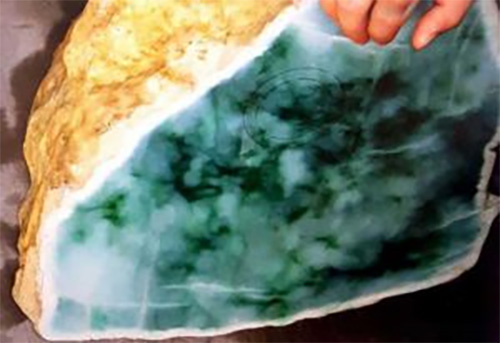
Appearance: After the outer skin is polished away, a pale white layer is revealed, resembling a thin, soft layer of white garlic skin covering the jade flesh.
Cause: White mist indicates that the jadeite rough contains extremely low or virtually no iron, making it a relatively pure jadeite rock. During the weathering process, the jadeite itself was not severely damaged; instead, slight dissolution occurred between the grains, forming microscopic voids. When light passes through these voids, it causes diffuse reflection, creating the appearance of a layer of white mist.
Quality Assessment: Jadeite with a “white mist” typically has few internal impurities, a clean base, a certain degree of transparency, and a relatively “mature” texture. If there is green beneath the white mist, the green is often exceptionally pure and vibrant.
Common Deposits: White mist is most commonly found beneath the surface layers of white sand, yellow salt sand, and black sand. The most famous source is the Muna deposit in the Old Mining Area.
2. Yellow Haze — A “Promising Prospect” Second Only to White Haze
Yellow mist ranks second only to white mist in quality and is also highly favored by connoisseurs.
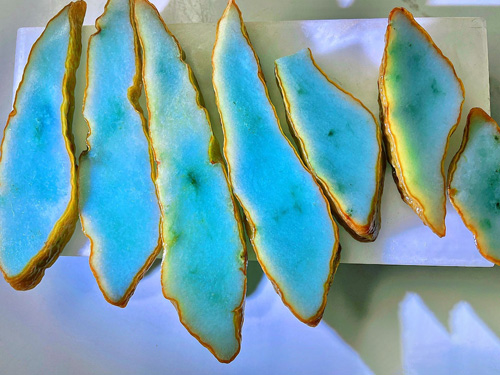
Appearance: Colors range from pale yellow, medium yellow, and deep yellow to golden yellow and aged yellow, offering a rich variety.
Cause: “Yellow Mist” results from the oxidation of iron in jadeite that has not yet reached an advanced stage. Research indicates that the primary color-forming mineral in “Yellow Mist” is goethite.
Quality Assessment: A pure, pale yellow mist indicates few impurity elements and often features “high-grade green” (high-quality green coloration). If Yellow Mist occurs in jade with good “Zong,” its value should not be underestimated; it makes excellent material for carved pieces with contrasting colors.
Common Mining Areas: Yellow mist is commonly found on yellow sand and water-stone surfaces, such as in the Dama Kan mining area.
3. Red Haze—A “Double-Edged Sword” That Is Both Loved and Feared
Among experts, there is a saying regarding red mist: “Ten reds, nine grays,” meaning that in nine out of ten cases, jade with red mist has a grayish internal texture.
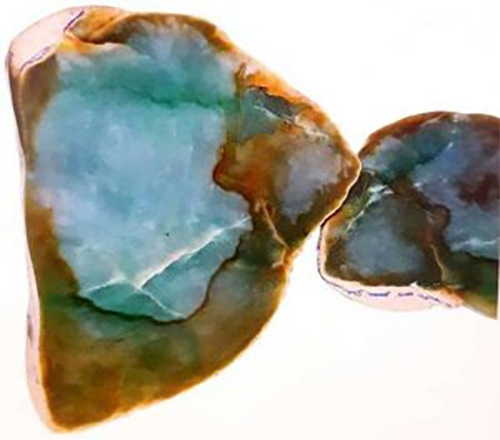
Appearance: It comes in two varieties: pale red and vivid red.
Cause: Red mist is the result of severe oxidation of iron. The formation process is as follows: After jadeite gravel containing blue mist is brought to the surface, large amounts of iron are leached out by acid rain, while a small amount is oxidized into trivalent iron ions and precipitates, forming red mist.In addition to goethite, the mineral responsible for the red mist is, to a lesser extent, hematite.
Quality Assessment: “Red Mist” typically indicates that the jadeite's internal base is rather grayish and of inferior quality. However, there are exceptions; in extremely rare cases, high-quality red jadeite may be found beneath “Red Mist.” Additionally, if the “Red Mist” is vivid in color, it can itself serve as a “color-matching” material for carving.
Special Note: Experts often say that red haze “loves to spread beyond the skin”—meaning it tends to extend beyond the surface of the skin. If the skin is also red, the jade inside is almost certainly gray.
4. Black Mist—The Riskiest “Gamble”
Black mist is the riskiest type of mist, and most people are reluctant to take a chance on it.
Appearance: Appears black or dark gray.
Causes: Black mist is primarily caused by the oxidation of a large amount of impurity elements. Specifically, manganese ions in jadeite oxidize into brownish-black substances, and the accumulation of black impurities such as hornblende collectively form black mist.Research indicates that the formation of blue mist and black skin is closely related to the hydrolytic dissolution of jadeite and the precipitation of chlorite.
Quality Assessment: Black haze typically indicates a high concentration of internal impurities and poor transparency. If the black haze is too thick, the jade's body may take on a blue, gray-blue, or even black-blue undertone. However, high-quality jade may occasionally be found beneath black haze, though its translucency is often very poor.
5. Other Special Haze Colors
In addition to the four main mist colors mentioned above, there are several other special types of mist:
-
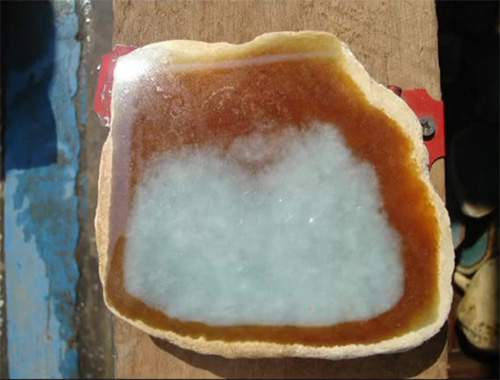
Honey Haze: The color resembles honey. This haze indicates that the jade's flesh is fine-grained and transparent, making it a top-grade variety among hazes.
-
Oxblood Haze: The color resembles congealed oxblood. Jadeite with this haze has a grayish base; if the outer skin exhibits “songhua” (green discoloration), it often contains numerous cracks, blemishes, and color irregularities, posing significant risks.
-
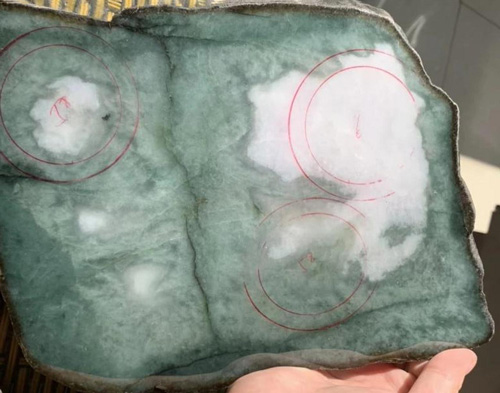
Gray Mist (Water-Soaked): Features a distinct gray hue with a clear boundary between the skin and the body. It generally has good transparency and often exhibits an oily green sheen.
-
Blue Mist: A gray-green mist primarily found in the black layers of the conglomerate rocks along the Wulu River in the Pa-Le region of Myanmar. It is perpetually submerged in water and exists in a reducing environment.Blue mist is the “precursor” to red and yellow mist—when blue mist is brought to the surface and oxidized, it gradually transforms into yellow and red mist.
V. The Practical Value of “Mist”—Why Do Experts Place Such High Value on It?
1. Determining the “Age” of the Jadeite's Texture
The thinner the mist layer, the older the jadeite‘s “zong” typically is. By observing the width of the mist layer at the cut surface, experts can roughly determine the maturity of the jadeite's zong—a thin mist layer (about one finger's width or narrower) indicates an old zong, while a thick mist layer (two fingers' width or wider) indicates a young zong.Some jadeite rough stones have an extremely thin mist—almost like a film—or one that is very difficult to discern; the “zong” of such rough stones can typically reach “ice-zong” or even “glass-zong.”
2. Assessing Internal Purity
The color of the haze directly reflects the presence of impurities within the jadeite. A white haze indicates low iron content and a clean base; a yellow haze suggests that iron has begun to oxidize but not severely; red and black hazes, on the other hand, indicate a higher concentration of impurities.
3. A Key Reference in Jadeite Gambling
In jadeite “gushí” (uncut rough), haze serves as a key indicator for determining the source, quality, and authenticity of the stone, and is also a crucial factor in setting the asking price. However, it is important to note that while haze can reveal a great deal, it does not directly indicate the presence of green; there is no必然 correlation between haze and the presence of green.
4. Utilizing “Qiaose” in Carving
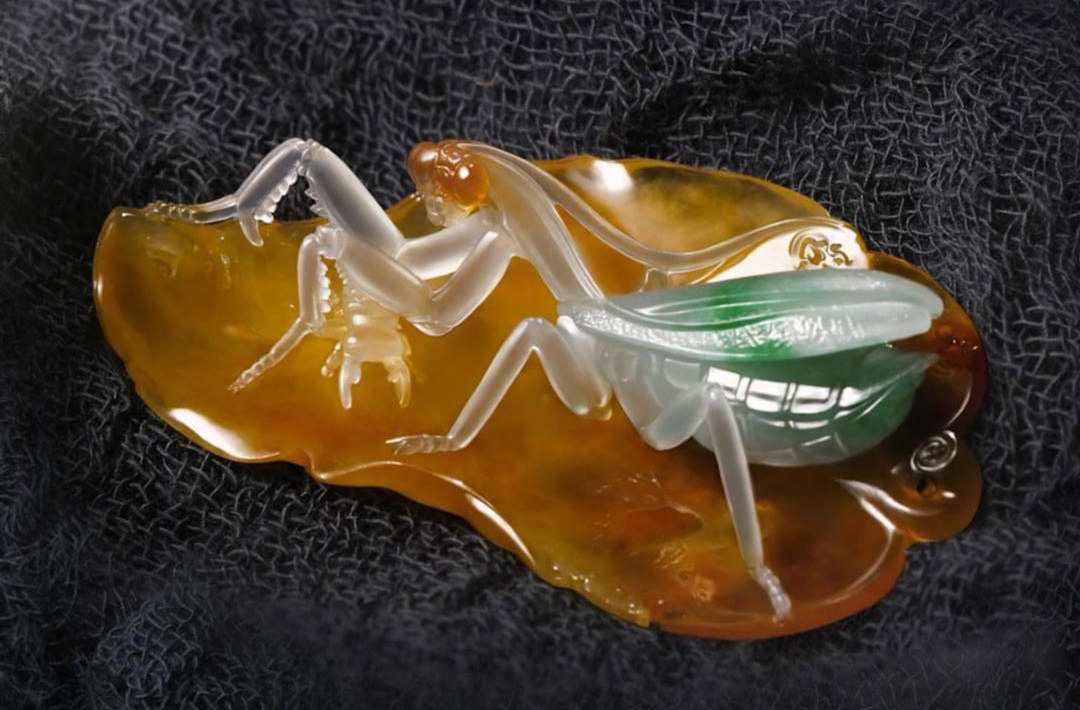
If the mist layer is vivid in color (such as red or yellow mist), it can itself be utilized as “color-matching” material in carving, thereby enhancing the jadeite's artistic value. As the trade saying goes: “Thick mist is jade; thin mist is just mist”—a thick mist layer can be used directly as jade.
VI. Summary
The “mist” in jadeite is the transitional zone between the skin and the jade body; it is a secondary alteration layer formed during the long-term weathering process of jadeite. Its colors—white, yellow, red, and black—reveal information about the internal quality of the jadeite to those in the know.
| Haze Color | Quality Assessment | Risk Level |
|---|---|---|
| White Mist | Mature texture, clear base, good translucency | Low Risk |
| Yellow Haze | Fair; may produce high-quality jade | Medium-to-low risk |
| Red haze | Mostly gray at the bottom; “nine out of ten reds are gray” | Medium-to-high risk |
| Black Mist | High impurity content, poor water quality | High risk |
| Honey-colored haze | Fine texture, transparent | Low risk |
Of course, there are no absolutes in jade stone gambling; even the best theories cannot guarantee 100% accuracy. Under a white mist, the jade's texture may turn out to be less than satisfactory, while a black mist may occasionally reveal a pleasant surprise. However, mastering the knowledge of mist is like gaining an extra pair of “eyes,” allowing you to see a little farther through the fog.